
Our History
One January evening in 1982, at a kitchen table in Baltimore, three women sat together and spoke about the unspeakable childhood sexual abuse perpetrated by family members (father, mother, brother-in-law) on each woman decades before. Using the Alcoholics Anonymous 12-Step recovery model, they admitted to being powerless over their histories, asked for help from a loving Higher Power so that they might make peace with their past, and began to heal and thrive in the present. They began casting off shame and self-blame, living their lives unencumbered by the legacy of abuse. That evening, a new mutual-help, 12-step program was born: Survivors of Incest Anonymous.
Now, in meeting places located around the world, on the phone, and the internet, people ages 18 through 118 come together and speak about what was once the unspeakable: their own reality of being sexually abused as children by those who were meant to care for and protect them. Guided by the 12 Steps and 12 Traditions of the SIA program, recovering survivors facilitate their own groups, providing peer-to-peer support. SIA is not intended to replace therapy or any other professional service when needed. SIA offers a fellowship of survivors who carry the message that we are not to blame, we are not alone, and together we can heal.
There is no typical SIA member profile; members are of all racial, ethnic, religious, and political backgrounds, with varying marital statuses, sexual orientations, and degrees of ability or disability. The abusers in their lives may be any family member, family friend, clergy, teacher, mentor, another child or teenager, or anyone who betrayed the victim’s innocence and trust. We define incest very broadly. Many of those who attend SIA meetings share their struggles with explosive anger, depression, addictions and compulsions, perfectionism, isolation, thoughts of suicide, and troubled relationships with family, spouses or partners, and authority figures. In SIA, we find hope and healing with self-confidence and self-esteem and learn to be gentle with and finally love ourselves.
Each new year, as we gather for our World Service Conference, SIA celebrates its birthday and looks back on an exciting history. We are reminded how a 1984 letter published in “Dear Abby” mentioned SIA and caught the attention of a national audience. Members of SIA made anonymous appearances on the national talk shows of the 1980s and 1990s, including “Donahue,” “Geraldo,” “Sallie Jessie Raphael,” and “People Are Talking,” to name a few. These appearances coincided with a cultural awakening that the taboo of talking about childhood sexual abuse will become a thing of the past. To that end, all SIA members work together in service to support the fellowship and shape SIA’s exciting future as it serves the needs of our worldwide membership.
For more information on SIA’s history, listen to co-founder Linda D on YouTube at https://www.youtube.com/@survivorsofincestanonymous.
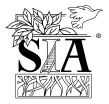
Explanation Of The Logo As Told By The Graphic Designer
The image I designed brings harmony to the basic concepts of the SIA program. It speaks to survivors about the continuity of life. The ladder, Jacob’s ladder, speaks of twelve steps to revelation and hope. The tree is a universal symbol of the passage of time and of strength and growth. The heart represents our emotions, ragged but still intact. While at times naïve, our heart now has wings.
Conceptually, the logo mirrors the idea of changing the perspective of self. From the self, formed in the days of incest, mirrored in the roots of the tree, to the present-day healing self, or heart with wings, it is not medical, austere, or restrictive. It asks you, as a survivor, to allow yourself to hope again, to change your patterns of dealing with your inner circle of family and friends, and your new, wider, global circle – your fellow survivors.
It subtly tugs on the sleeve of the world: “We are here. Listen. We help ourselves through change. We are ready to help others.”

 English
  Español
  Français
  Português do Brasil
  فارسی
فارسی